How Long Do Permanent Outdoor Lights Last in Vancouver?
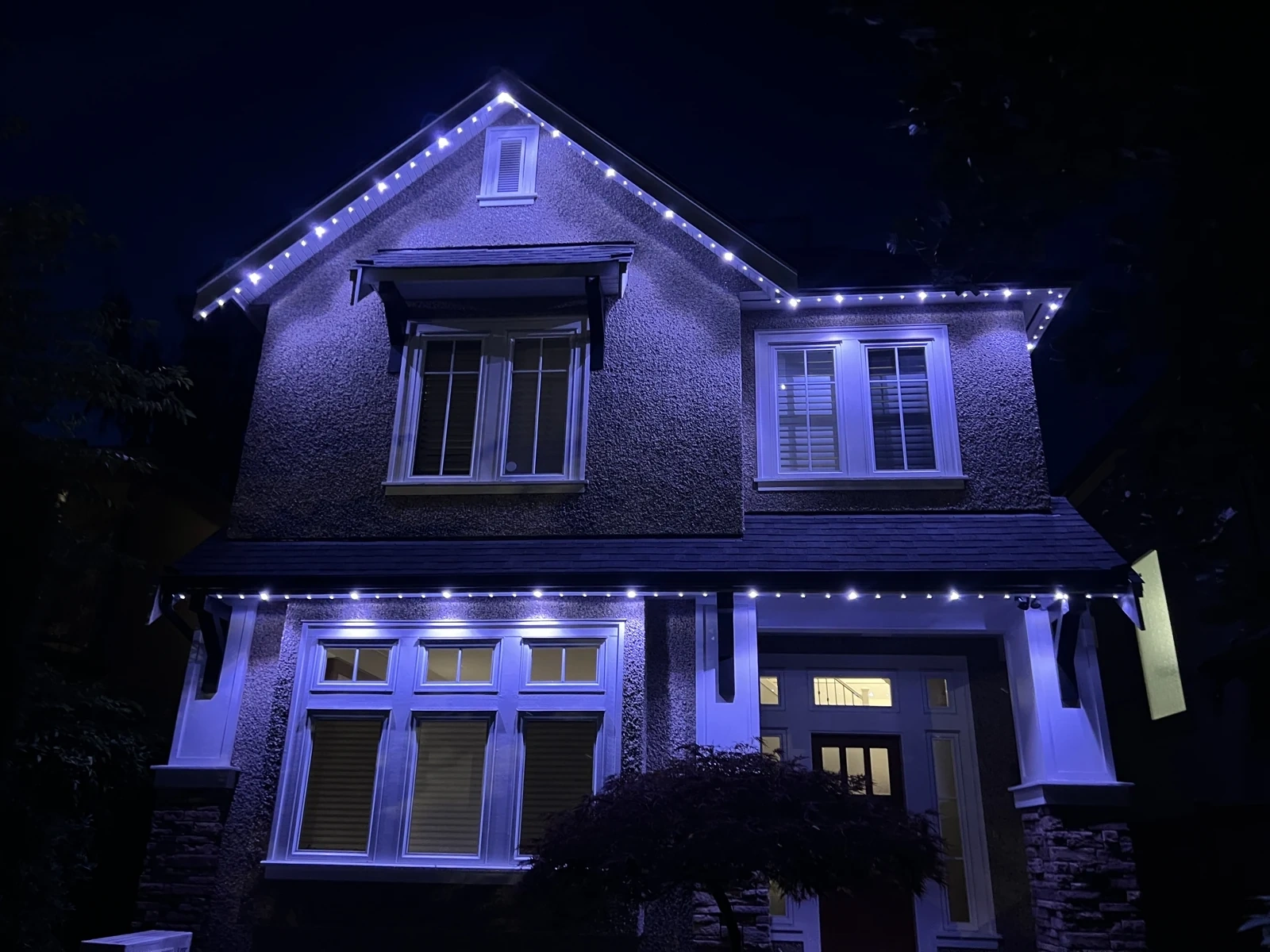
A high-quality permanent outdoor lighting system in Vancouver can realistically last 20 to 25 years or more, while the LEDs themselves may be rated for up to 100,000 operating hours.
At eight hours of use per night, 100,000 hours works out to more than 34 years. But that does not mean every part of a permanent lighting system will automatically last that long.
Permanent outdoor lights also rely on wiring, connectors, controllers, power supplies and protective track. In Vancouver, those components need to withstand years of rain, moisture and changing coastal weather.
That means the real lifespan of permanent outdoor lights depends on more than just the LED rating. Installation quality, water protection, component quality and how often the system is used all play a major role in how long it lasts.
This guide will discuss:
- Why permanent lights can last 25 years in Vancouver
- What a 100,000-hour LED lifespan actually means
- How Vancouver rain and moisture affect lifespan
- Which parts of a permanent lighting system usually wear out first
- How usage and brightness can affect LED lifespan
- What makes some permanent lighting systems last longer than others
Do Permanent Lights Last 25 Years in Vancouver?
A high-quality system can. Vancouver Glow installs Prairie Lighting Pro Pixels rated for up to 100,000 operating hours. That gives the LEDs more than enough rated operating life to support decades of regular use, although the lifespan of the complete system also depends on installation quality, weather protection and the other electrical components. Prairie Lighting's manufacturer FAQ distinguishes regular pixels at 50,000+ hours from Pro Pixels at up to 100,000 hours.
Actual longevity depends on several factors:
- Component quality
- Installation quality
- Weather protection
- Usage and brightness
If you’re weighing the long-term investment, read our guide to how much permanent Christmas lights cost in Vancouver.
What Does a 100,000-Hour LED Lifespan Mean?
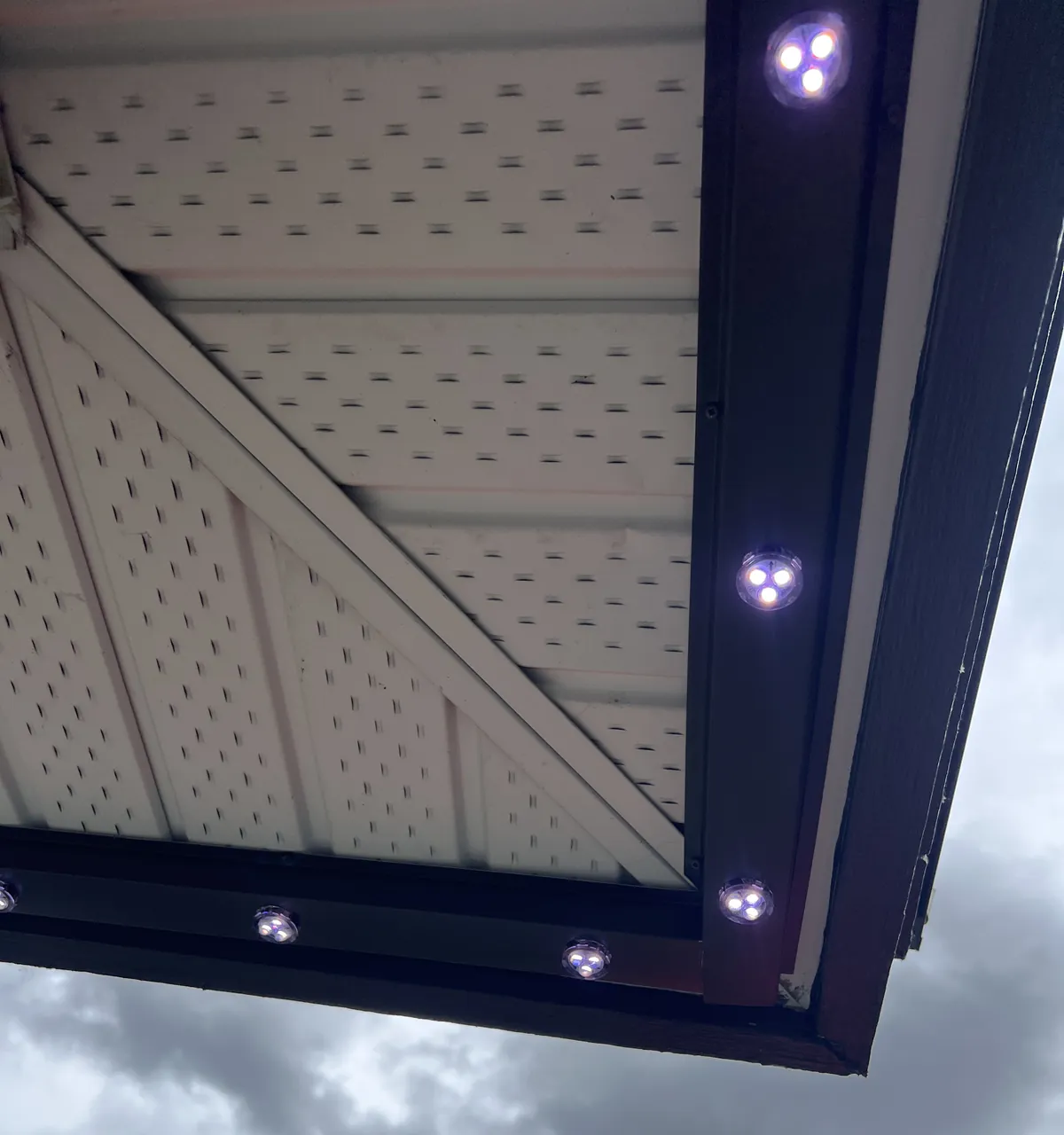
LED lifespan is measured in operating hours. The clock only runs while the lights are turned on.
That means a 100,000-hour LED rating can represent very different amounts of calendar time depending on how often you use your system.
LEDs generally lose brightness gradually as they age. A lifespan rating describes expected performance over time—it does not mean every LED suddenly stops working at that hour.
| Average Daily Use | 100,000 Hours Equals |
|---|---|
| 6 hours per night | About 45.7 years |
| 8 hours per night | About 34.2 years |
| 10 hours per night | About 27.4 years |
Those figures are mathematical examples rather than promises that your entire lighting installation will remain untouched for exactly that many years.
Is 100,000 Hours a Guarantee?
No. It is a lifespan rating for the LEDs, not a guarantee that every light will operate perfectly for exactly 100,000 hours or that every component will last that long.
Weather exposure, installation and power quality all affect real-world performance. A quality system may provide decades of regular use while still needing an individual component serviced along the way.
How Does Vancouver's Climate Affect Permanent Lights?
Vancouver's proximity to the Pacific produces a mild, wet coastal climate. Permanent lighting must withstand repeated moisture exposure, and rainfall varies significantly across Metro Vancouver.
Does Vancouver's Rain Shorten Their Lifespan?
Environment and Climate Change Canada's 1991–2020 climate normals report average annual precipitation of approximately 1,160 mm at Vancouver International (Airport) and 1,537 mm at Vancouver (Harbour).
The older 1971–2000 normals for North Vancouver Capilano report approximately 2,044 mm annually. This is historical context rather than a like-for-like comparison with the newer stations, but it illustrates why moisture protection matters on the North Shore.
Rain can shorten the life of a poorly protected installation. Vancouver Glow's Prairie Lighting system uses IP68-rated LEDs designed for permanent outdoor exposure to rain and moisture, with lighting and wiring housed in colour-matched aluminum track beneath the roofline.
But the IP rating of the pixel itself is only one part of what makes the system suitable for Vancouver.
A long-lasting installation also requires:
- Protected connections
- Properly routed wiring
- Correct power-supply placement
- Secure mounting
- Exterior-rated components
- A track system designed for permanent installation
Why Vancouver's Climate Is Different From Much of Canada
Greater Vancouver has some of the mildest winters among Canada's major urban areas, and prolonged snow cover is uncommon. In colder cities, extreme cold can be a major concern. Here, prolonged rain and moisture are often more relevant.
A roofline in Point Grey, Kitsilano or Kerrisdale may spend much of winter exposed to rain rather than months of deep snow. Conditions become wetter toward the North Shore, making weather sealing and protected connections particularly important.
What Parts of Permanent Lights Usually Wear Out First?
Because LEDs can have extremely long operating lifespans, other components may require attention before the pixels reach their rated hours.
A permanent lighting system typically contains:
- LED pixels
- Wiring
- Connectors
- Power supplies
- Controllers
- Aluminum track
- App and network hardware
Power supplies and controllers are electronic devices and may eventually require replacement.
That does not mean the entire system needs to be removed.
A properly designed permanent lighting system should allow individual components or damaged sections to be serviced when necessary.
Think of it more like maintaining another permanent feature of your home than replacing an entire string of temporary Christmas lights whenever one component develops a problem.
What Can Shorten the Lifespan of Permanent Lights?
Running the Lights Every Night
More frequent use accumulates LED operating hours faster, but regular nightly use is what permanent lighting is designed for. There is usually no need to leave the lights on from sunset until sunrise.
During a Vancouver winter, for example, scheduling warm-white lighting from 5:00 p.m. to 11:00 p.m. gives you six hours of evening lighting. Turning it off when it is no longer needed saves electricity and avoids unnecessary operating hours.
Brightness Levels
How intensely an LED is driven can affect heat and long-term performance. Homeowners rarely need maximum brightness all the time, and warm-white architectural lighting often looks better at a lower setting.
You might use brighter colours for a Christmas display or a Halloween pattern, then switch to softer warm white for normal evenings.
The Prairie Lighting app allows you to adjust brightness, colours, patterns and schedules based on how you actually want your home to look.
Physical Damage and Exposure
Even durable lighting can be affected by physical damage or exposed connections. Take care when work is being done around the roofline, and have damaged sections checked rather than leaving wiring unprotected.
Exterior wiring can be physically damaged by:
- Roofing work
- Renovations
- Animals
- Ladders
- Other trades working around the soffit
- Accidental impacts
What Makes Some Permanent Lighting Systems Last Longer?
Two products can both be advertised as "permanent outdoor lights" and still be very different systems.
Long-term reliability comes from the complete installation.
Outdoor-Rated Components
The LEDs, wiring and electrical connections should be designed for long-term exterior use.
That is particularly important in Vancouver, where repeated rain exposure is a normal part of winter.
Proper Aluminum Track
A permanent track keeps the lights evenly spaced while concealing and protecting the wiring.
It also gives the installation the clean appearance that separates permanent lighting from traditional Christmas-light strings.
Professional Installation
A high-quality LED is still dependent on the wiring and connections behind it.
Poor connections, exposed wiring or rushed installation can create problems long before a quality LED reaches its expected lifespan.
Replaceable Components
Controllers, power supplies or individual sections may eventually require service.
A system designed with replaceable components is much more practical over 20 or 25 years than one that has to be completely removed if something fails.
A Real Warranty
Vancouver Glow provides a 10-year warranty on the permanent outdoor lighting system and a lifetime warranty on the LED bulbs.
That gives homeowners protection if a covered component has an issue during the warranty period.
Permanent Outdoor LED Lifespan FAQs
What are permanent outdoor lights?
Permanent outdoor LED lights—also called permanent Christmas lights—are low-voltage LED lights installed in colour-matched aluminum tracks under your soffits or along your roofline. They can display 16 million colours, are app-controlled, and are designed to last 25+ years.
Do permanent lights last in Vancouver rain?
Yes, provided the system is designed and installed for exterior conditions.
Vancouver Glow uses IP68-rated Prairie Lighting Pro Pixels, with protected wiring and connections suited to Vancouver's wet coastal climate.
Do permanent lights need maintenance?
Permanent LED systems are generally low-maintenance, but controllers, power supplies, wiring or individual components can eventually require service over the lifespan of the installation.
Does leaving permanent lights on all night shorten their lifespan?
It accumulates LED operating hours faster.
Using schedules to shut the lights off when they are no longer needed reduces electricity consumption and avoids unnecessary operating hours.
How long is Vancouver Glow's warranty?
Vancouver Glow provides a 10-year warranty on the permanent outdoor lighting system and a lifetime warranty on the LED bulbs.
For more answers about controls, schedules and everyday use, visit our permanent outdoor lighting FAQs.
How Long Should Permanent Lights Last on a Vancouver Home?
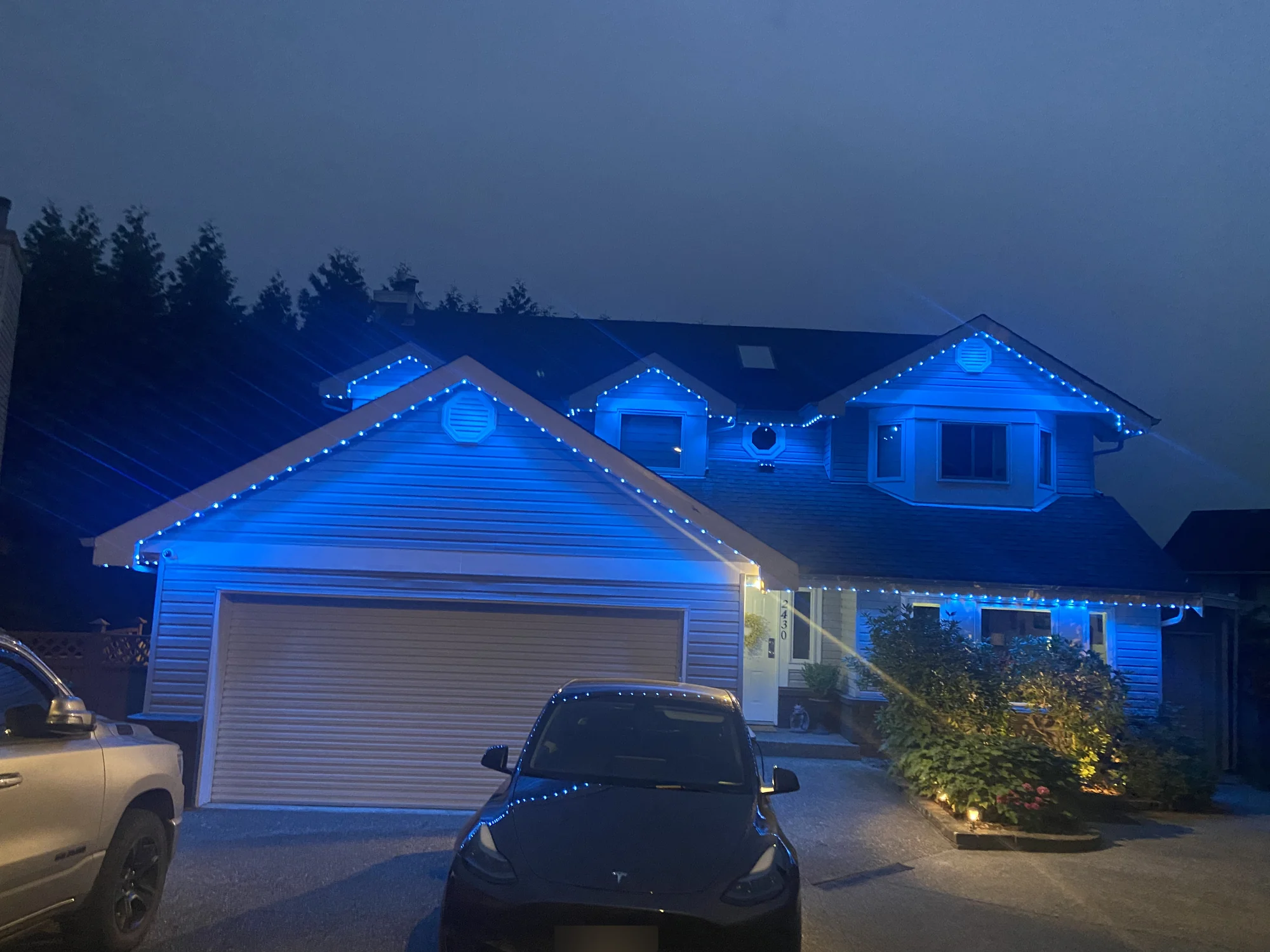
A quality permanent outdoor lighting system can provide 20 to 25 years or more of regular use, but the LED lifespan is only part of the equation.
For Vancouver homeowners, long-term performance depends on the entire system: weather-rated LEDs, sealed connections, durable aluminum track, quality power components and professional installation. Vancouver's rain and moisture make those details especially important.
That is why it is better to look at permanent lighting as a complete exterior system rather than simply asking how many hours the LEDs are rated to last. A well-designed system should also use serviceable and replaceable components, so an issue with one part does not mean replacing the entire installation.
Vancouver Glow installs Prairie Lighting systems designed for year-round exterior use, backed by a 10-year system warranty and lifetime warranty on the LED bulbs.
Want to see what permanent lighting looks like after it is installed? View our Vancouver permanent lighting gallery, or contact Vancouver Glow to discuss your home.
